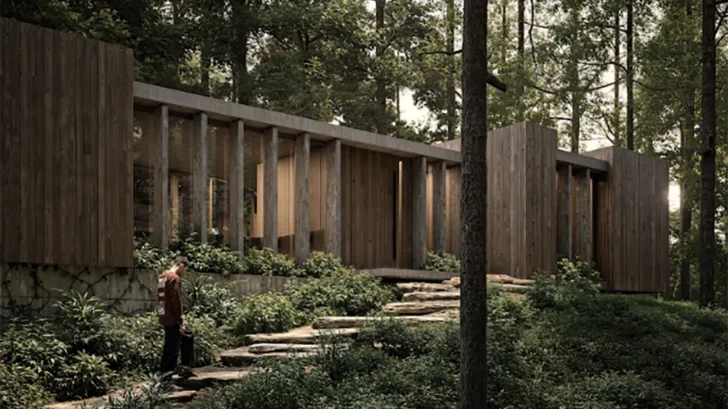

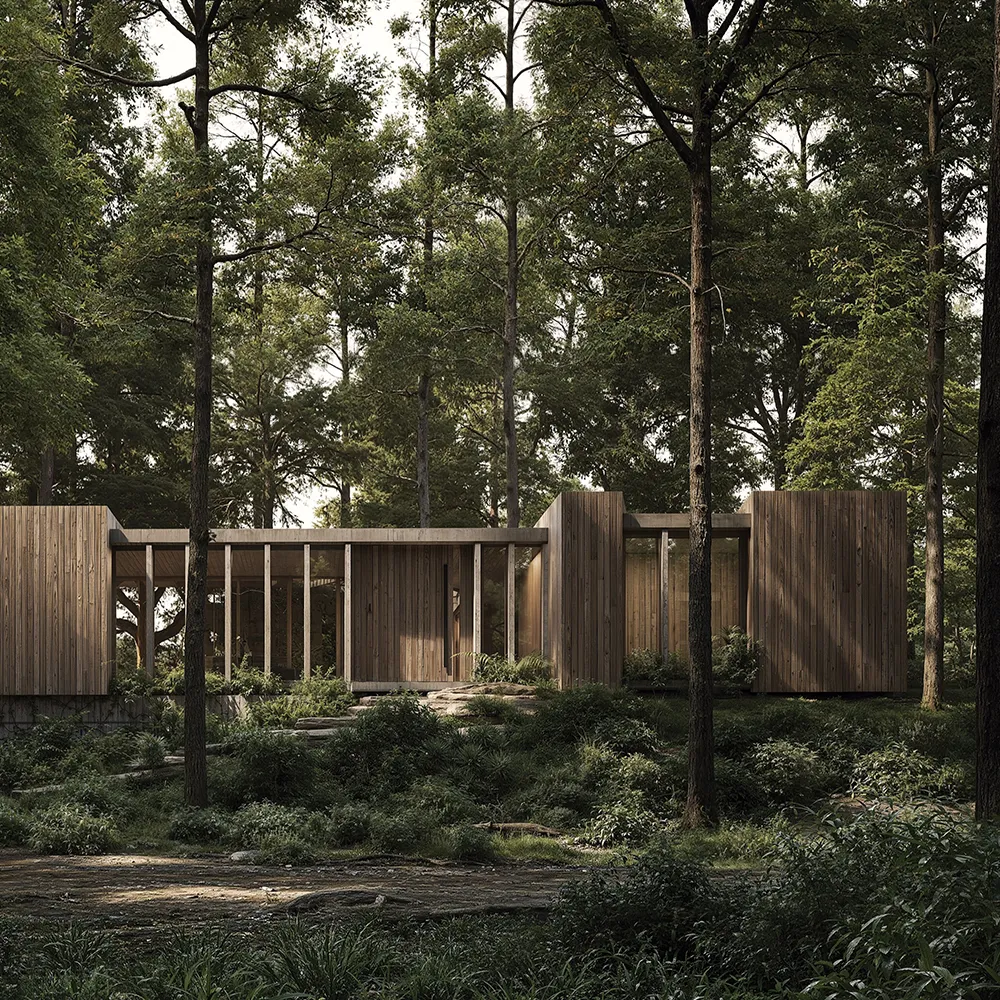
Grizzo Studio designed Matorral House as a single-family residence shaped by the dense forest of Cariló, in Argentina’s Buenos Aires Province. Existing shrubs and mature trees guided the position of the building, the organization of its interior spaces, and the direction of its principal views. The studio treated the vegetation as an active part of the architectural plan, allowing the conditions of the site to determine how the house occupies the plot.
HOUSING
The project follows an L-shaped configuration that divides the residence into two clearly defined wings. One wing contains the shared living areas, including the living room, dining room, and kitchen. The architects arranged these functions as a continuous open space with direct views toward the surrounding vegetation. Large openings extend the interior toward the garden and maintain a close relationship between everyday domestic activity and the forest.
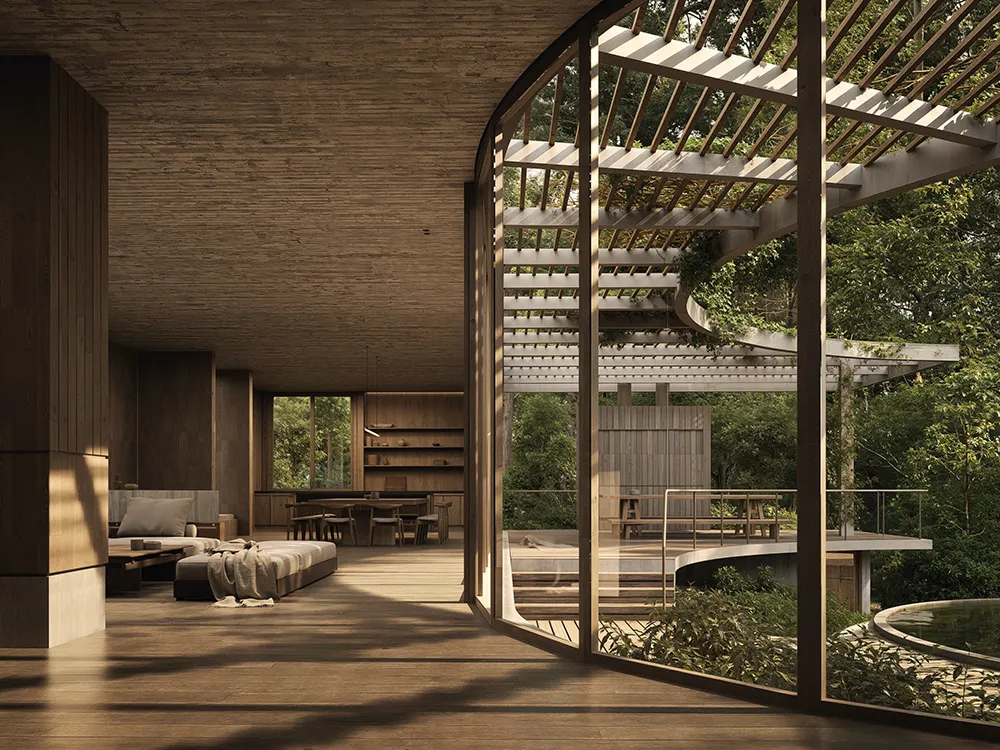
The second wing contains the bedrooms and establishes a quieter, more private section of the house. Each room retains a visual connection with the site while remaining separated from the main social areas. This arrangement creates a clear distinction between collective and private functions without disconnecting either section from the trees.
A circular swimming pool occupies the space between the two wings and forms the visual center of the project. The house opens toward the water from its main rooms, creating a shared point of reference across the plan. Its curved form provides a counterpoint to the linear geometry of the residence and responds to the irregular forms found throughout the surrounding vegetation.
Grizzo Studio conceived the pool as a reflective surface that captures the movement of the tree canopies above it. Light, branches, and changing weather conditions appear across the water, bringing the exterior environment into constant view. The pool therefore supports the spatial organization of the house while strengthening the visual connection between its rooms.
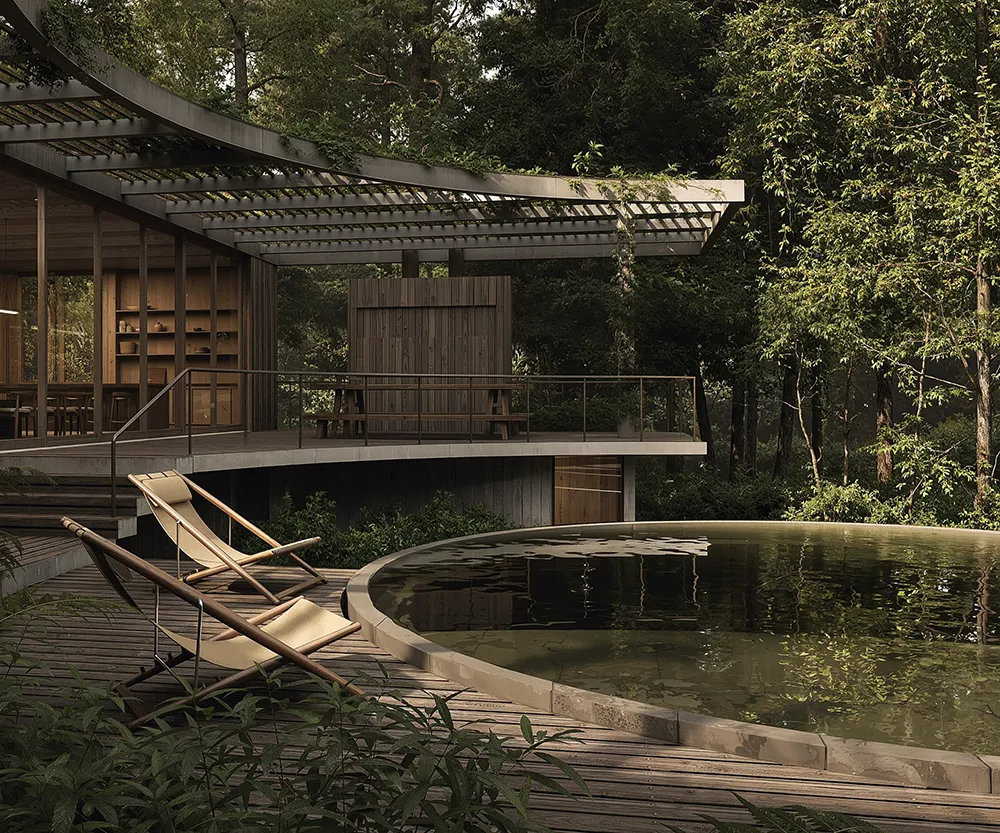
The architects placed the garage and service areas at the lowest point of the sloping site. These spaces form a base beneath the main residence and allow the building to respond efficiently to the natural change in elevation. By incorporating the slope into the organization of the house, the studio reduced the need to impose a uniform level across the plot.
Tree preservation remained a primary factor throughout the design process. The building shifts, opens, and folds around the existing vegetation, creating framed views toward individual trunks and groups of trees. These adjustments give each interior space a specific relationship with the forest and prevent the architecture from functioning as an isolated object.
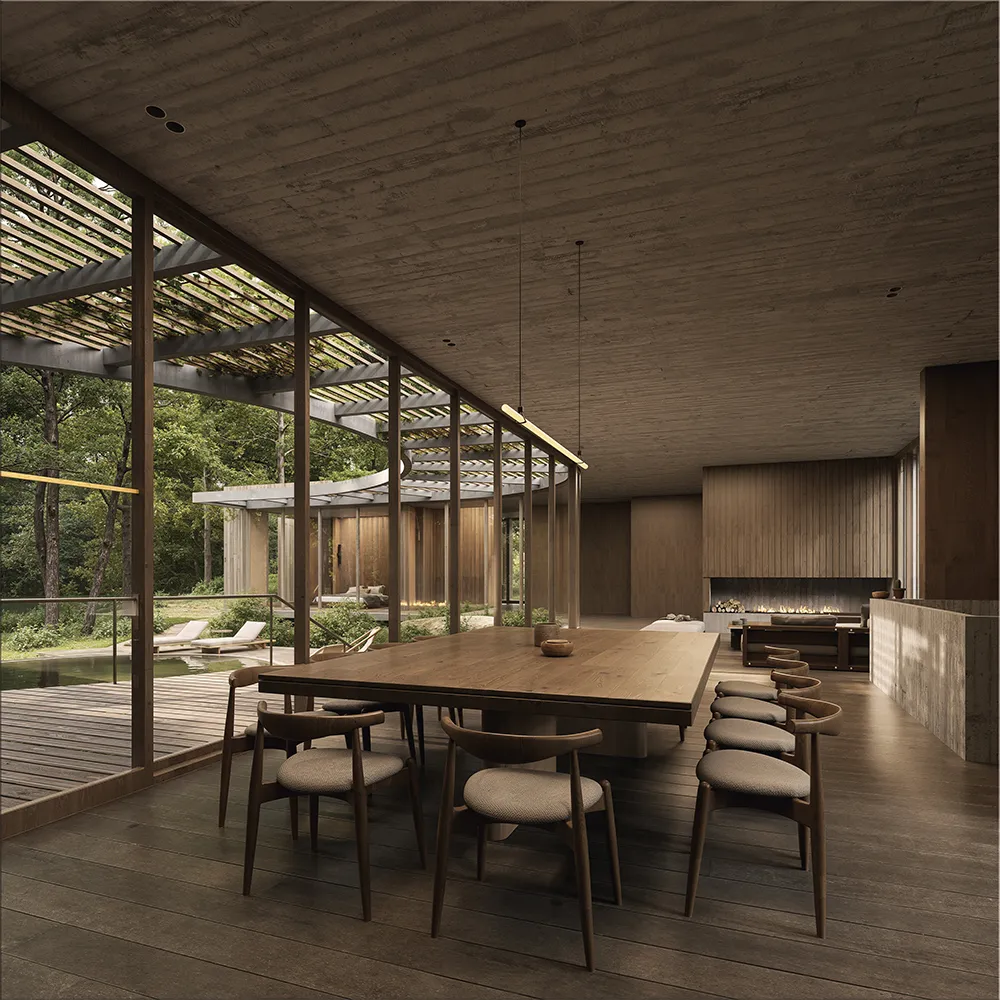
The residence avoids separating the garden from the interior through a single fixed boundary. Instead, windows, openings, covered areas, and views create a series of gradual connections between enclosed rooms and the site. The forest remains visible while occupants move through the living spaces, bedrooms, and circulation areas.
Matorral House presents architecture as a response to what already exists. Grizzo Studio uses the L-shaped plan, the circular pool, and the sloping base to organize the residence around the natural features of the plot. Through this approach, the house preserves the character of its setting and places the experience of living among the trees at the center of daily life.