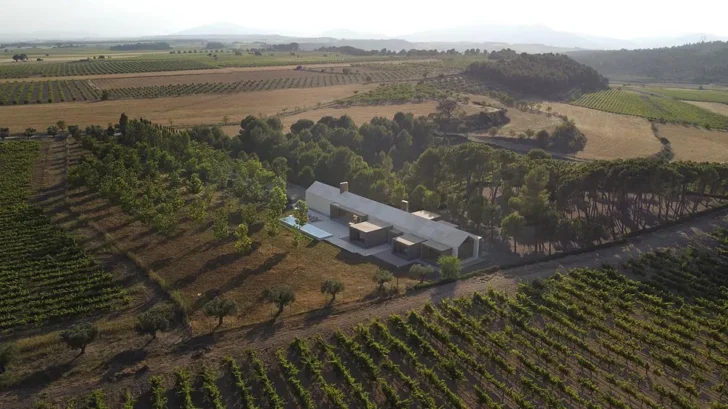

Set just beyond the village of Fontanars, the house occupies a threshold between pine forest and agricultural plots. Ramón Esteve and his team prioritized visual and environmental continuity, designing a home that reads as an extension of the landscape rather than a standalone object.
HOUSING
The program unfolds on a single level, reducing its footprint and allowing the volume to settle naturally into the terrain. A restrained palette of white concrete and thermally modified pine reinforces this discreet presence, offering deep shade and a climate-responsive solution.
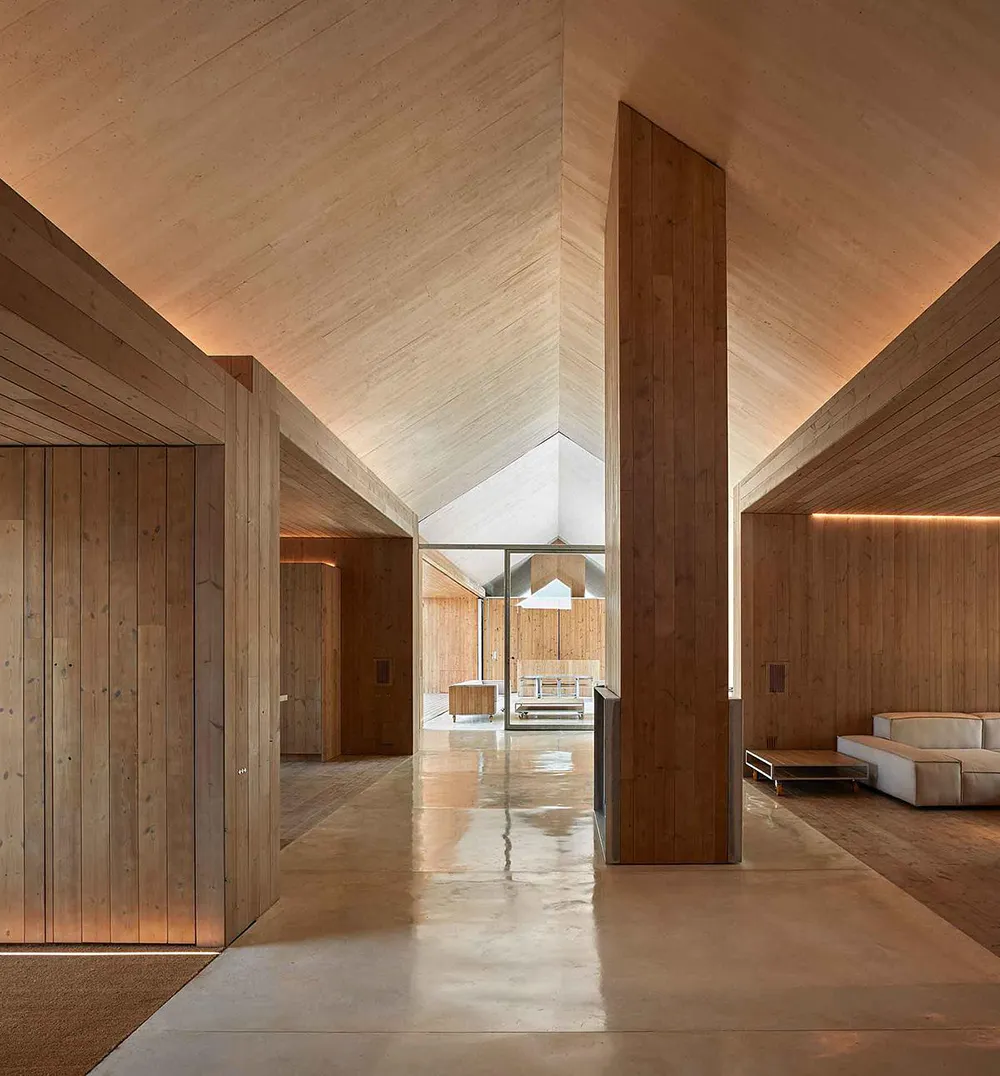
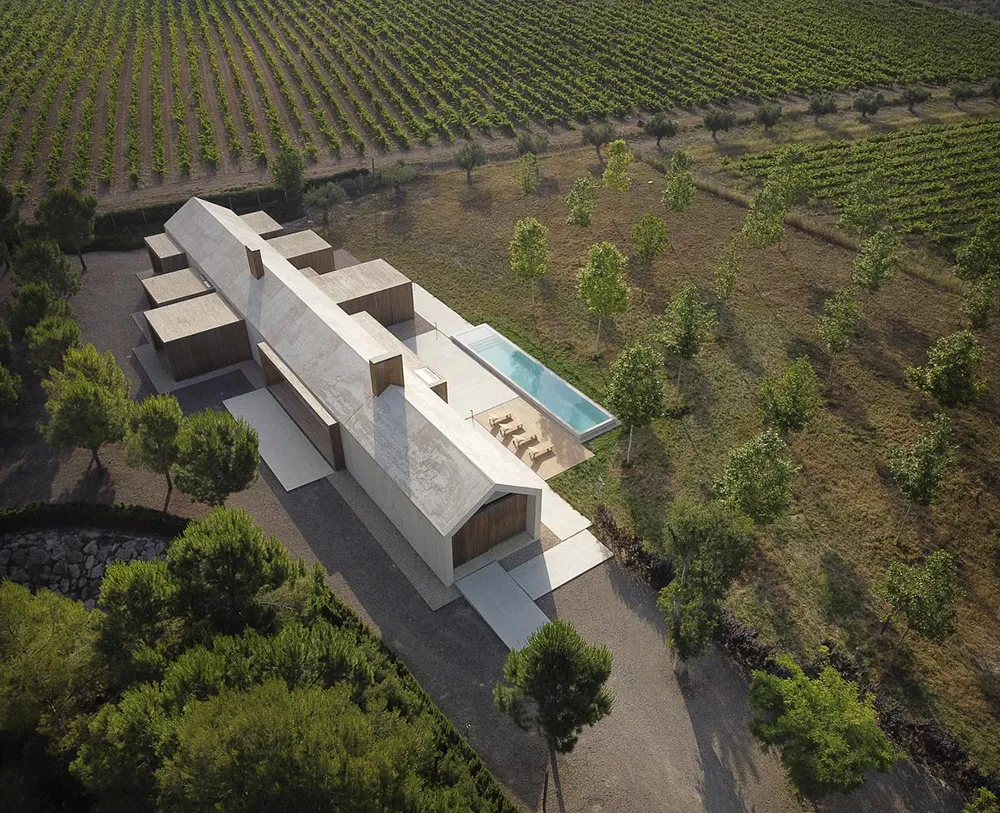
The home’s geometry evolves from the perimeter of a traditional pitched-roof dwelling, stretched and extruded to form a continuous monolithic concrete shell. Timber volumes intersect the spine perpendicularly, acting as both structure and filter. These warm pine “containers” define thresholds, carve sightlines, and frame views of the surrounding vineyards and pine canopy. The arrangement produces a clear spatial rhythm, balancing the weight of concrete with the tactility and scale of timber.
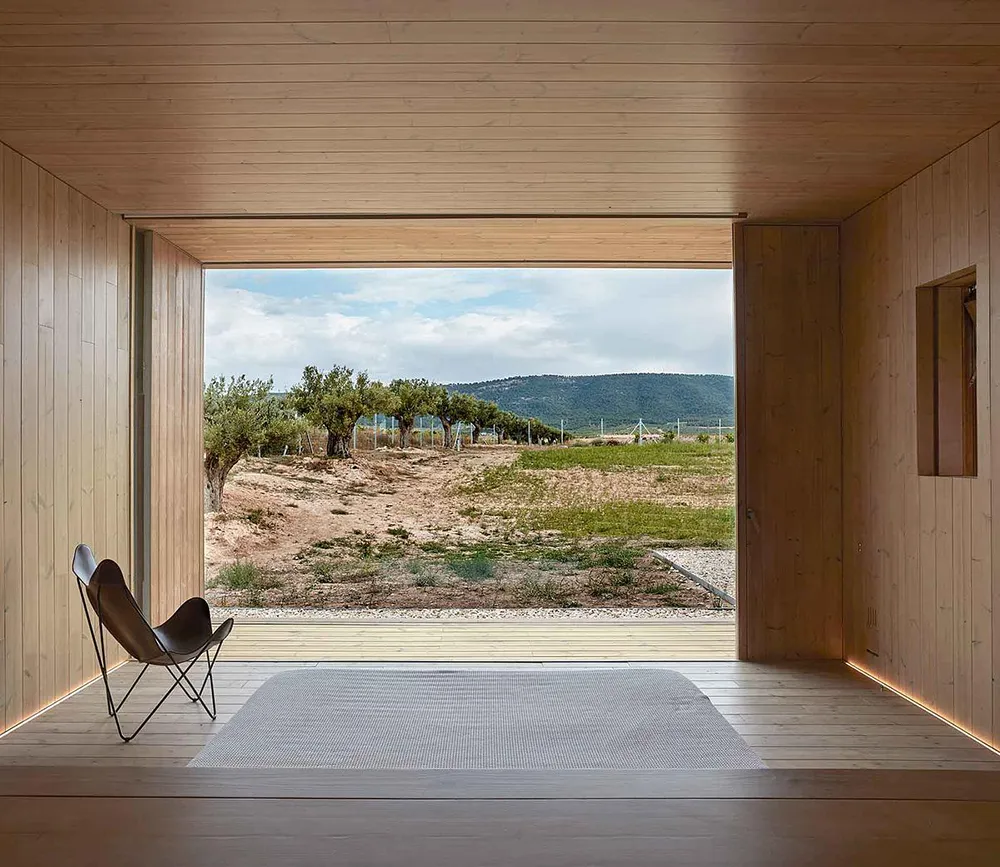
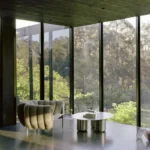
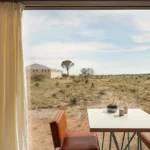
Arrival is guided by an olive-lined path, with the house partially screened by cypresses, poplars, and pines. Entry occurs through a timber volume into a central concrete living space anchored by a large fireplace. Rooms open off this core, connecting interior and exterior, while timber volumes and porch zones can be secured when the home is unoccupied. A generous porch at the far end functions as an outdoor living area with dual orientations: immediate, shaded views into the pine forest and expansive vistas across the vineyards.
Construction logic is governed by a consistent 20 cm timber module echoed in the timber volumes, concrete formwork, furniture, and built-ins, creating coherence across the material system. White concrete provides mass and permanence, while pine introduces warmth and inhabitable scale. Passive-house principles guide the environmental approach, combining high-performance envelope design, rock-wool insulation, and renewable-energy strategies including solar panels, biomass supply, and rainwater collection. Natural daylight is optimized through an efficient lighting system, minimizing energy consumption.